AI still needs taste, context, and direction
I spend time in Reddit communities for tools like Windsurf and Warp, and one thing keeps showing up: even highly technical users are frustrated.
They complain about credits running out too fast, token limits, usage caps, and the general feeling that they burn through resources before they can actually finish what they set out to do. These are not casual users. These are developers and power users. In many cases, they already know what they want to build, what is broken, and what needs to change. They are using AI more like a fast assistant than a magic wand.
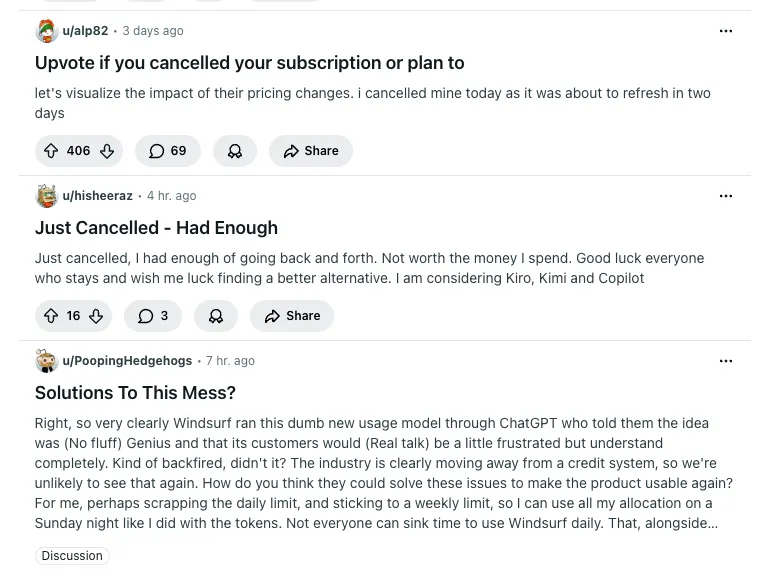
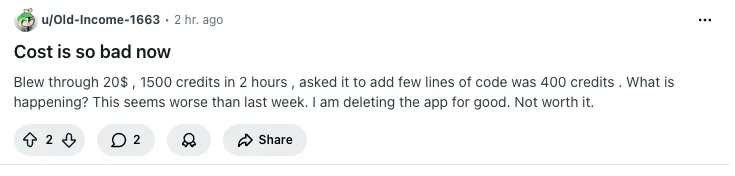
But if the people closest to the cutting edge are still struggling, what does that say about everyone else?
If those of us who know what to build and how to build it are unable to get a simple answer, what are inexperienced people running into?
We keep hearing that building with AI is easy. And I agree. In theory, that is true. You can generate a landing page, write copy (I can barely write anymore without help), create images, and even scaffold code in minutes.
There are even people who claim to “vibecode”: build stuff on vibes alone. No keyboard needed. No QA. No nothing.
The output looks polished, but looking polished is not the same as being good or useful.
That gap matters.
For someone without experience in design, development, marketing, or product thinking, AI can help produce the veneer of a solution.
It can create the surface.
It can make something look finished. But knowing what should be built, what problem actually matters, what to prioritize, what to remove, and how to judge whether the result is any good still requires human judgment.
That is why AI feels both impressive and incomplete at the same time.
This is not a new story. We have seen versions of it before.
When website builders like Wix and Squarespace became popular, people started asking why anyone would still hire a web designer. For me, the answer was never that Wix was bad. Wix is pretty cool.
It lowers the barrier to entry. It helps people launch things faster. But it also has limits. More importantly, having access to a tool is not the same as having the ability to make good decisions with it.
The target audience for someone who wants a website built in Wix is not the same as the target audience for someone who wants to hire a professional.
It’s the same thing with AI.
AI makes execution faster, but speed does not replace clarity. It does not replace taste. It does not replace context. And it definitely does not replace the ability to ask better questions.
That last part is becoming more obvious every day.
Even in areas where AI is incredibly capable, the quality of the result still depends heavily on the person using it.
A doctor and a non-doctor can both use ChatGPT to think through symptoms, but they are not bringing the same background knowledge into the conversation.
One knows what to notice, what to ignore, what to test, and what follow-up questions matter. The other may still get useful information, but they are doing it without the framework needed to guide the tool well.
The same applies to building products, writing copy, designing websites, or creating software.
AI is powerful. But it still depends on human direction. Thankfully, building websites is rarely a matter of life or death, as with medicine. But the gap is still there.
That is why I do not think the most important divide right now is between people who use AI and people who do not. I think it is between people who know how to think through a problem and people who expect the tool to do the thinking for them.
The real value is not just in prompting. It is in framing. In judgment. In knowing what good looks like and what works.
In understanding the context behind the request. In being able to tell whether the output solves the real problem or just makes it look like it does.
Will AI eventually replace many jobs? Probably. At least in part.
But right now, even the most motivated and technically literate users are still wrestling with the gap between what AI can produce and what a successful outcome actually requires, especially at a low cost.
That should tell us something important:
The tool is getting better very quickly. But human insight is still doing more of the heavy lifting than people want to admit.
By the way, I have yet to see a truly good vibecoded app built by a non-builder.