Blackstone Granite: A catalog that sells
A clearer product and inventory system for fabricators.
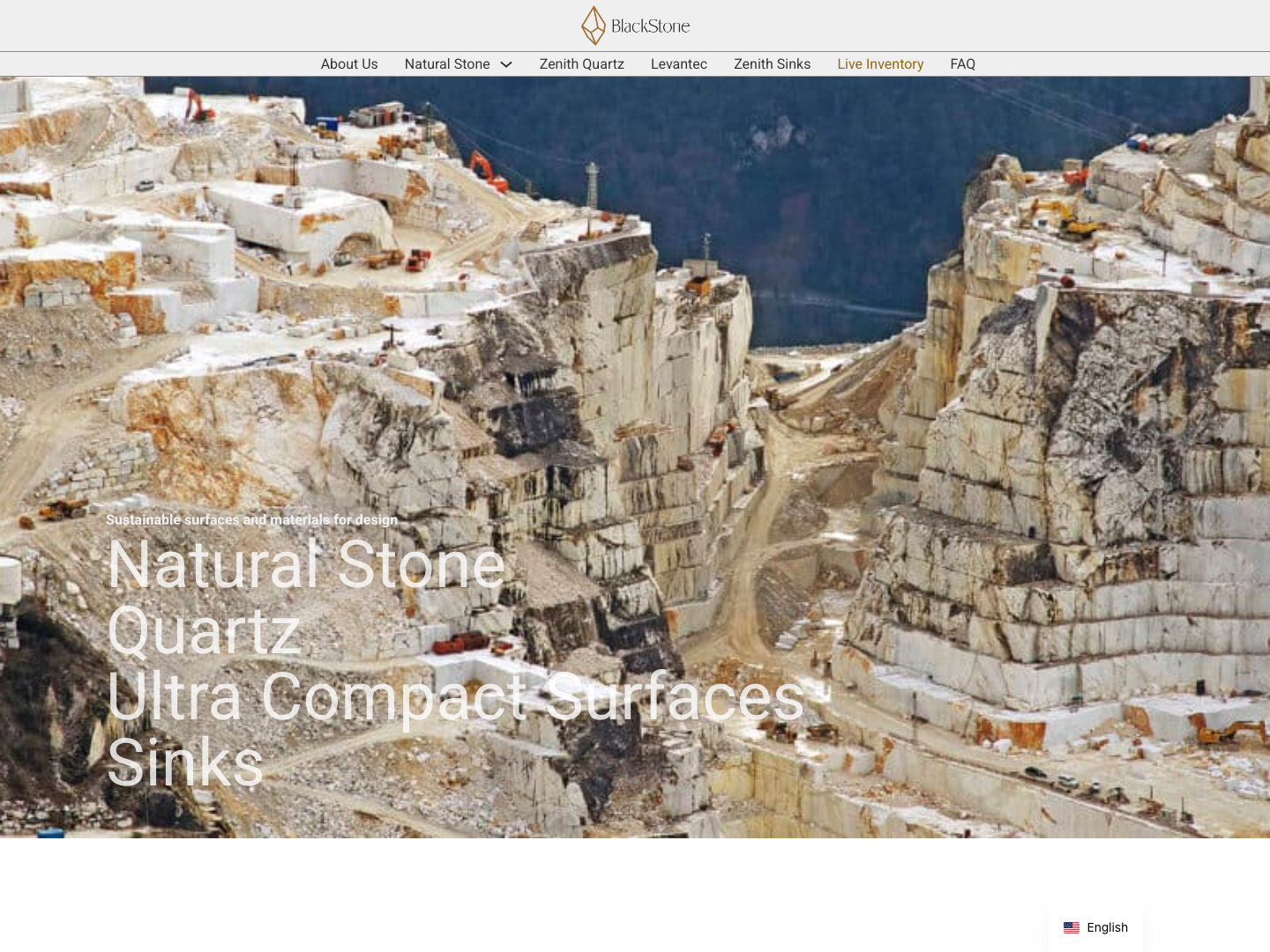
Overview
Blackstone Granite is a B2B stone supplier serving fabricators who use its catalog to present materials to their own clients. The website is a shared reference point between supplier, fabricator, and end customer, but it had not been updated in more than six years and no longer supported the company’s expanded inventory or day-to-day operations.
The problem
The website was not simply outdated. It was failing as a system of record. Fabricators needed it to present materials, verify availability, and compare options, but inventory signals were unreliable, categories were inconsistent, and materials with the same name appeared across different types without a clear distinction.
Users often had to call to confirm stock. That made the website difficult to use confidently in front of clients and created an opening for competitors with clearer catalogs.
Context and constraints
- Orders still needed to happen offline.
- The catalog covered multiple brands, material types, and variations.
- Duplicate names appeared across different materials.
- Inventory data was split between the POS and website.
- The existing system relied heavily on internal knowledge instead of structured data.
Research and insights
I audited the website, POS system, and competing catalogs. The primary users were fabricators and designers, and they treated the site as a sales tool rather than a marketing destination. They did not need more content; they needed reliable signals and a predictable structure.
Defining the opportunity
The opportunity was to turn a fragmented catalog into a dependable decision-making system: standardize the product hierarchy, surface inventory clearly, and align navigation with the way fabricators search for and compare materials.
The solution
The new hierarchy moves from material to color to variation, creating a consistent path through a complex inventory. Product pages use adaptive templates and conditional logic so each material can show the right level of detail without forcing incomplete content into a rigid layout.
Inventory information includes real-time slab counts, stock visibility, and on-hold states with clear next steps. A hybrid data model combines the POS as the inventory source with the website as the content layer.
Execution
I redesigned the navigation, product hierarchy, page templates, and backend content structure. The work balanced operational constraints with front-end usability so the system could scale without asking staff to duplicate knowledge manually.
Results and impact
- Fewer calls were needed for routine inventory checks.
- Fabricators could use the catalog with greater confidence.
- Internal product-management work became more efficient.
- The website became part of the sales system rather than a static reference.
Reflection
The hardest part was aligning internal knowledge, POS data, and user needs into one coherent system. Future improvements include stronger search and clearer differentiation between brands.